
The Art of Balance: Why We Look Out When We Should Look In
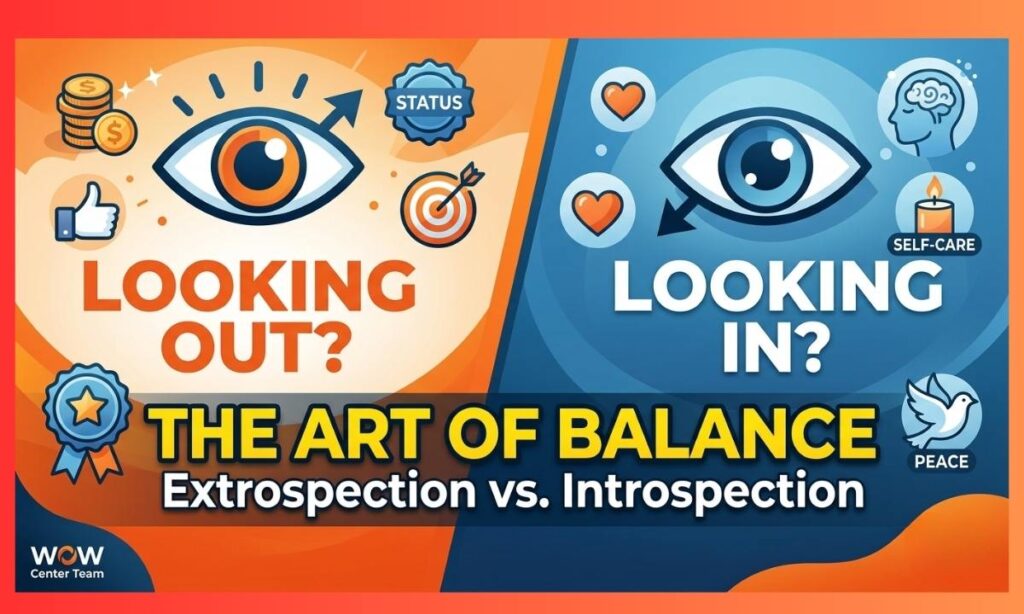
Human life is a fascinating paradox. We spend the vast majority of our waking hours focused on the world around us. We obsess over our careers, scroll through social media, manage our relationships, and chase the next big purchase. This outward focus is what we call extrospection.
While looking outward is a necessary part of survival, we rarely pause to look inward. This internal journey, or introspection, is often ignored, yet it is the very thing that keeps us grounded. Most of us operate under the assumption that the “real world” is only what happens outside of ourselves, but is that actually true?
Understanding Extrospection: The World Outside
Extrospection is the act of directing your attention toward your environment. It involves:
- Observing societal trends and expectations
- Chasing professional and personal goals
- Accumulating material possessions
- Seeking validation and recognition from others
Extrospection isn’t inherently bad. In fact, you need it to navigate life. You use it to earn a living, build a family, and interact with your community. However, when extrospection becomes your only way of seeing, life can quickly become a treadmill of stress, comparison, and eventual burnout.
Understanding Introspection: The World Within
Introspection is the practice of turning your attention inward. Contrary to popular belief, it isn’t about escaping reality or overthinking your problems until you’re miserable. True introspection is about mindful awareness. It involves:
- Watching your thoughts without judgment
- Noticing how emotions move through your body
- Observing your instinctive reactions to stress
- Connecting with the silent flow of life within you
When we look inside, we begin to understand why we react the way we do. We stop being victims of our emotions and start becoming observers of them.
Why Is the Inner World So Often Ignored?
If introspection is so valuable, why do most people avoid it? There are four primary reasons:
1. Social Programming
From the time we are children, we are conditioned to focus on external results. We are told to study for grades, work for titles, and behave for the sake of reputation. Rarely are we encouraged to simply “know ourselves.”
2. Visible Rewards
Society rewards what it can see. People will admire your new car or your job promotion, but no one can see your inner peace. Naturally, we tend to chase the things that offer immediate, visible feedback.
3. Fear of the Silence
When you first try to sit in silence, you don’t always find peace immediately. You might find restlessness, old memories, or anxiety. Many people run back to the noise of the external world because they are afraid of what they might find in the quiet.
4. The Illusion of Practicality
We are taught that the world “out there” is the only reality that matters. We believe that if we don’t fit into the external mold, we have failed. This makes extrospection feel like the only practical way to live.
The Analogy of the Dirty Window
Imagine a house. The window represents your extrospection; it is what the world sees. The room inside represents your introspection; it is your private, inner state.
Most people spend all their energy polishing the window glass. They want the world to see a sparkling, successful image. But they never go inside to clean the room. As a result, they may look perfect from the sidewalk, but inside, they are suffocating in clutter, dust, and darkness.
Extrospection without introspection is a clean window in a dirty room. It looks good to others, but it feels miserable to live in.
Finding Synergy with Chetasyog
The goal isn’t to choose one over the other. To live a full, healthy life, you need both. In the philosophy of Chetasyog, this is called synergy.
- Extrospection provides the tools for outer living: work, creativity, and expression.
- Introspection provides the foundation for inner balance: peace, clarity, and harmony.
When you use both, you achieve what we call Whole Oneself Wellbeing. Without introspection, life feels shallow. Without extrospection, life feels isolated. Together, they create a balanced human experience.
Simple Practices for a Balanced Life
You don’t need to move to a monastery to start balancing these two worlds. Here are four simple ways to integrate introspection into your daily routine:
- The Two Minute Pause: Before you start your workday, sit quietly. Don’t look at your phone. Just notice your breath and the thoughts passing through your mind.
- The Mirror Check: When you look in the mirror to check your hair or clothes, take an extra second to ask yourself, “How am I actually feeling today?”
- The Balanced Question: When faced with a big decision, ask two things: “How does this look to the world?” and “How does this feel in my gut?”
- End of Day Reflection: Before bed, identify one worldly success (like finishing a project) and one inner insight (like realizing why a certain comment made you angry).
Final Thoughts
Living life with only one of these “wings” is like a bird trying to fly with only one side. Extrospection allows you to participate in the world, while introspection allows you to remain aware of your true essence.
By practicing both, you stop living in a prison of external perceptions and start living in the clarity of mindful awareness. That is the ultimate goal of balance: to be successful in the world, while remaining at peace within yourself.