
Navigating Intense Mood Swings: Finding Balance Between Ecstasy and Grief
Life often feels like a pendulum. One day you are soaring in a state of ecstasy, and the next, you might find yourself submerged in deep grief. We move through seasons of burning rage, paralyzing terror, and moments of profound admiration or loathing. These intense emotional shifts can make it feel as though we are passengers on a ride we cannot control.
But why do humans experience these extremes? More importantly, is there a way to steady ourselves so we don’t get swept away by every emotional storm?
The answer lies in a concept known as Chetasyog, which explores the relationship between our individual identity (the Self-Me) and the broader, silent consciousness of existence (Life-Is).
The Spectrum of Human Emotion
Emotions are not random. They are signals—energetic responses designed to guide us through the world. However, they almost always exist in pairs of opposites:
- Ecstasy vs. Grief: The highs of fulfillment and the lows of loss.
- Rage vs. Terror: The fire of boundary-crossing and the ice of survival instinct.
- Vigilance vs. Amazement: The tension of scanning for danger and the openness of wonder.
- Loathing vs. Admiration: The instinct to reject and the pull to connect.
When we operate solely from the Self-Me—our ego, personality, and physical body—we are at the mercy of these swings. We become the person sliding back and forth on a seesaw. But when we connect with Life-Is, we find the center point. We learn to observe the movement without being thrown off balance.
Understanding the Internal Symphony
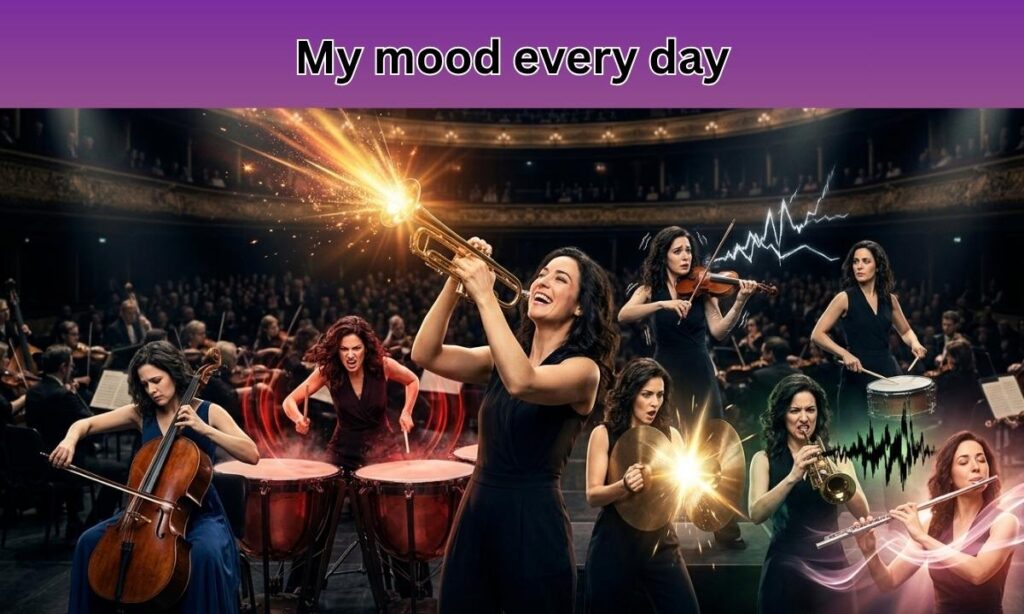
Imagine your emotional world as a grand orchestra.
Ecstasy is the triumphant blast of a trumpet. Grief is the somber, haunting melody of a cello. Rage is the thunderous beat of war drums, and terror is the trembling vibration of a high-pitched violin.
If you are sitting in the middle of the orchestra pit, the noise is deafening and chaotic. This is how the Self-Me experiences life. However, Life-Is represents the conductor. The conductor doesn’t play the instruments but provides the rhythm and harmony that turns noise into music. Through Chetasyog, you stop being the noise and start becoming the conductor.
The Movie and the Screen
Another way to visualize this is through the lens of a cinema.
The movie playing on the screen is full of drama—action, tragedy, and joy. If you get too caught up in the story, you forget you are in a theater. You feel the hero’s fear and the villain’s malice as if they were your own.
The Self-Me is the character in the movie, constantly under threat or celebration. The Life-Is is the screen itself. The screen is never burned by the fires in the film; it is never made wet by a cinematic flood. It remains steady, white, and whole, no matter what story is projected onto it.
Why Mood Swings Happen
From an evolutionary perspective, these swings serve a purpose:
- Rage protects our boundaries.
- Terror keeps us alive in the face of threat.
- Vigilance ensures we stay alert.
- Admiration encourages us to grow and emulate excellence.
The problem isn’t that we have these feelings; the problem is that we identify with them. We say, “I am angry” or “I am sad,” instead of recognizing that “Anger is passing through.”
Practical Steps for Emotional Balance
Chetasyog doesn’t ask you to stop feeling. Instead, it invites you to become a mindful witness. Here are five ways to practice this daily:
- Label the Emotion: Simply naming a feeling—”This is rage”—creates a small gap between you and the energy.
- Breathe through the Wave: Take three deep breaths. This signals to your nervous system that you are safe, even if the emotion is intense.
- Ground Yourself: Physical touch, like feeling your feet on the floor, helps anchor the Self-Me when the mind starts to spiral.
- Identify as the Screen: Remind yourself: “This emotion is the movie; I am the screen.”
- Look for the Lesson: Ask what the emotion is trying to teach the Self-Me. Every feeling carries a hidden piece of wisdom.
Finding the Silent Witness
Take the example of Meera, a student who felt exhausted by her own volatility. By practicing these pauses, her life didn’t become “flat,” but it did become manageable. Her rage transformed into a source of strength, and her grief softened into compassion.
She realized she wasn’t just her moods; she was the silent witness behind them. This shift is the essence of emotional freedom.
Final Reflection:
The next time you are caught in a storm of emotion, take a moment to pause. Ask yourself: “Am I the character in the movie, or am I the screen holding the story?” Recognizing the screen is the first step toward lasting peace.