
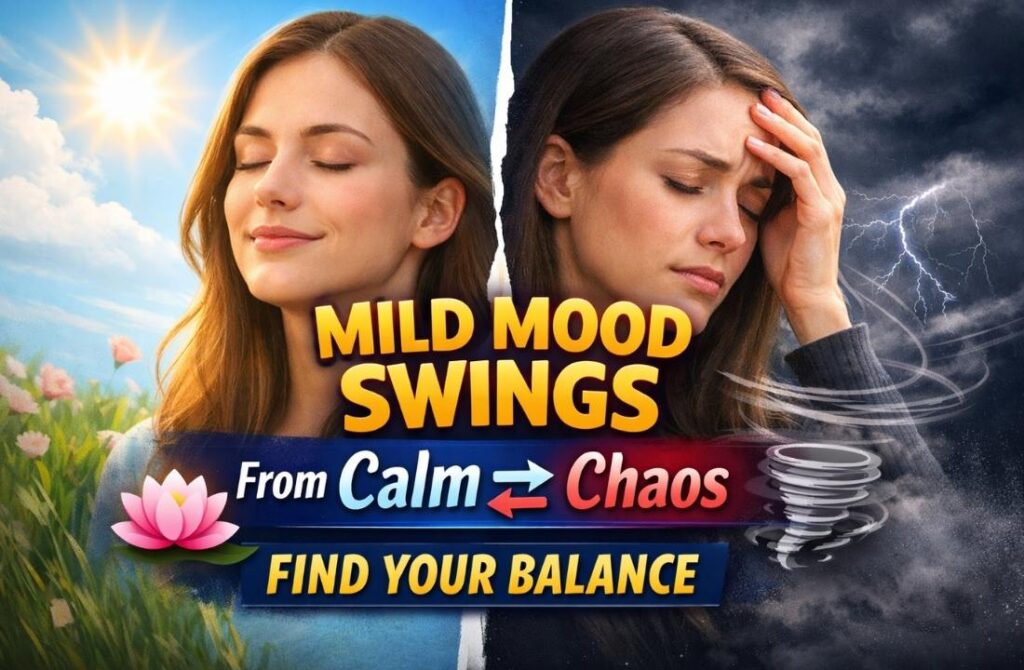
Have you ever noticed how your mood can change several times in a single day?
You may wake up feeling calm and peaceful, then become thoughtful about life. A small irritation at work turns into uneasiness. Later, boredom appears during a routine task, only to be replaced by acceptance. You feel deeply interested in something for a moment, then suddenly distracted.
These are mild mood swings—small emotional shifts that happen to almost everyone. They may not feel dramatic, but they can quietly affect your productivity, relationships, energy, and peace of mind.
The good news is that these subtle emotional changes are normal. More importantly, they can become opportunities for self-awareness and balance.
Through Chetasyog, the synergy between Self-Me (your personal identity, mind, and emotions) and Life-Is (the deeper awareness or cosmic consciousness), you can learn how to observe these moods without being controlled by them.
Let’s explore how.
What Are Mild Mood Swings?
When people hear the phrase mood swings, they often think of extreme emotions like anger, sadness, or excitement.
But in everyday life, mood shifts are often much gentler.
Examples include:
- Serenity turning into pensiveness
- Annoyance becoming apprehension
- Boredom shifting into acceptance
- Interest changing into distraction
These subtle changes happen naturally as the mind responds to thoughts, situations, stress, and surroundings.
The problem is not the mood itself.
The problem begins when we start believing we are the mood.
For example:
- “I am bored.”
- “I am distracted.”
- “I am anxious.”
In reality, boredom, distraction, and anxiety are temporary inner experiences—not your identity.
Why Do Mild Mood Swings Happen?
Our mind and nervous system constantly respond to life.
Each mood often carries a message:
Serenity
A sign of rest, balance, and inner harmony.
Pensiveness
The mind may be processing something important.
Annoyance
A boundary may feel crossed.
Apprehension
The mind senses uncertainty or possible risk.
Boredom
A desire for growth, novelty, or meaning may be present.
Acceptance
A moment of peace with what is.
Interest
Curiosity and engagement are active.
Distraction
Mental energy is scattered or overstimulated.
Moods are not enemies. They are signals.
The Sky and Clouds Analogy
Imagine your mind as the sky.
- Calm moods are clear blue skies
- Thoughts are moving clouds
- Irritation is a grey cloud
- Worry is a darker cloud
- Interest is sunlight
- Distraction is changing wind
Clouds come and go.
But the sky remains.
In the same way, moods change throughout the day, but your deeper awareness remains steady underneath them.
Chetasyog teaches us to remember:
You are not only the passing mood. You are also the awareness that notices it.
How Chetasyog Helps Balance Mood Swings
Chetasyog does not teach suppression or emotional control.
Instead, it teaches conscious observation and harmony.
When you become aware of moods without immediately reacting, something changes:
- Pensiveness can become clarity
- Annoyance can become healthy assertiveness
- Apprehension can become preparedness
- Boredom can become creativity
- Distraction can become gentle redirection
This is the meeting point of Self-Me and Life-Is.
Your human emotions remain, but they stop ruling your life.
Practical Ways to Handle Mild Mood Swings
1. Name the Mood
Quietly say:
- “This is boredom.”
- “This is worry.”
- “This is distraction.”
Naming the feeling creates healthy distance.
2. Take Three Slow Breaths
Breathing calms the nervous system and reduces emotional momentum.
3. Ground Yourself in the Body
Feel your feet on the floor or notice your heartbeat.
This brings attention back to the present moment.
4. Remember Awareness
Tell yourself:
This feeling is passing. I am more than this momentary mood.
5. Ask What It Is Teaching
Every mood may carry wisdom.
Ask:
- What needs attention?
- What needs rest?
- What needs change?
A Real-Life Example
Aarav, a young professional, often felt emotionally pulled throughout the day.
He started mornings peacefully, then became worried about deadlines. Small comments annoyed him. Meetings bored him. New ideas excited him, but phone notifications distracted him.
After learning Chetasyog, he began pausing whenever moods shifted.
He noticed instead of reacting automatically.
Within weeks:
- Worry became planning
- Annoyance became calm communication
- Boredom became creative thinking
- Distraction became mindful breaks
His moods still changed—but they no longer controlled him.
Key Insight
Mild mood swings are part of being human.
They are not signs of failure or weakness.
They are natural movements of the mind.
When Self-Me becomes lost in them, life feels unstable.
When Life-Is is remembered, moods become temporary waves moving through a larger stillness.
That is the essence of Chetasyog.
Final Reflection
The next time you shift from calm to worry, boredom to acceptance, or focus to distraction, pause for a moment and ask:
Am I only this passing feeling, or am I also the awareness holding it?
That question can open the door to calmness, wisdom, and whole-self well-being.