
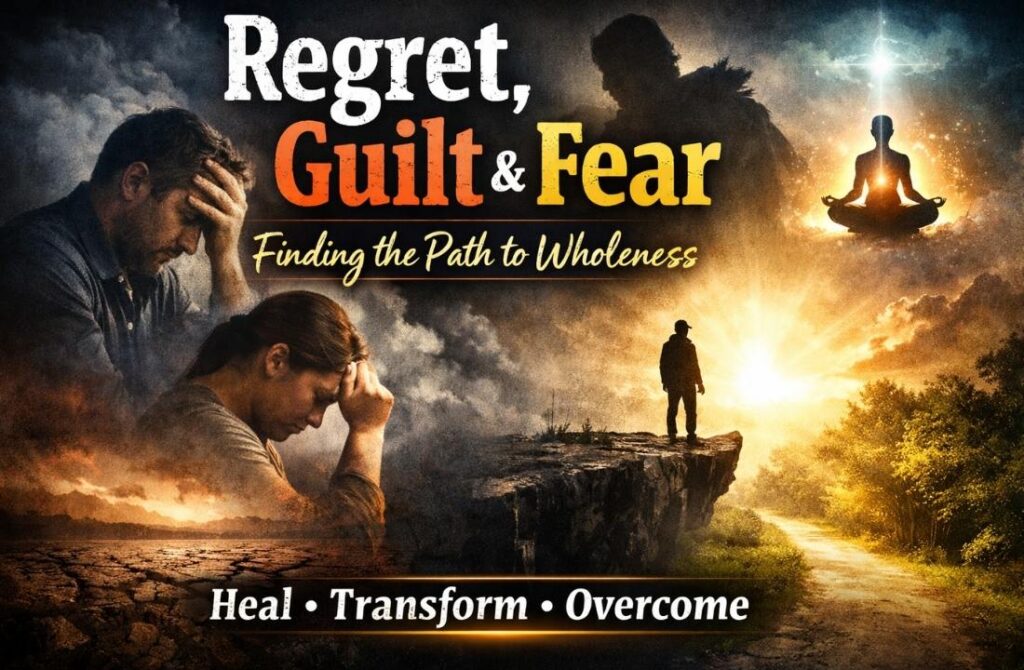
Regret, Guilt and Fear: Shadows of the Self and the Path to Wholeness
By WOW Center Team | September 5, 2025
Have you ever been haunted by the thought, I should have done things differently? Or found yourself replaying mistakes from the past again and again? Maybe fear about the future keeps you awake at night, filling your mind with endless worries.
Regret, guilt, and fear are common human experiences. Everyone faces them at some point in life. But when we do not understand how to deal with them wisely, these emotions can grow heavier and begin affecting our peace, relationships, and mental well-being.
This article explores how regret, guilt, and fear arise, how they can lead to suffering, and how mindful awareness through the path of Chetasyog can help restore balance between the individual self and Life itself.
Understanding the Three Shadows of the Self
1. Regret: Pain from the Past
Regret is the emotional pain of looking backward and wishing something had happened differently.
Common thoughts include:
- I should have made another choice
- I should have spoken up
- I should not have trusted them
Living in regret is like driving while constantly looking in the rearview mirror. You lose sight of the present and struggle to move forward.
2. Guilt: Regret with Self-Blame
Guilt happens when regret turns inward and becomes judgment against yourself.
Examples:
- I am a bad person for what I did
- I hurt someone and it is all my fault
Healthy guilt can encourage accountability, but unhealthy guilt becomes a burden that weighs down the mind and heart.
3. Fear: Anxiety About the Future
Fear is concern about what may happen next.
Typical fears include:
- What if I fail?
- What if I lose everything?
- What if they leave me?
Fear often creates problems in the mind long before they exist in reality.
How Regret, Guilt and Fear Turn Into Suffering
These emotions are not the real problem. They are natural signals of the individual self. The deeper suffering begins when we feel disconnected from Life, purpose, and inner awareness.
When this connection is lost:
- Regret becomes endless self-pity
- Guilt becomes self-hatred
- Fear becomes paralyzing anxiety
This creates the false belief that we are alone, helpless, or meaningless.
The Emotional Spiral Into Depression
When regret, guilt, and fear are ignored or misunderstood, they can spiral into deeper pain:
Sadness
A persistent feeling of heaviness or emptiness.
Depression
Loss of joy, numbness, low motivation, and emotional exhaustion.
Troubled Living
Relationship conflicts, unhealthy habits, poor choices, and inner chaos.
Suicidal Thoughts
When the mind believes there is no escape or hope.
Like a plant cut off from sunlight, the self begins to weaken when it feels disconnected from Life.
The Way Back: Healing Through Chetasyog
Chetasyog is the mindful awareness of harmony between the individual self and Life itself. It teaches that healing does not come from escaping emotions, but from understanding and transforming them.
How Transformation Happens
Regret Becomes Learning
Instead of staying trapped in the past, regret can become wisdom that guides better choices.
Guilt Becomes Responsibility
Rather than punishing yourself, guilt can inspire growth, accountability, and self-forgiveness.
Fear Becomes Wise Preparation
Fear can become a signal to act carefully, prepare well, and remain aware.
Powerful Analogies for Understanding
The Mobile Phone Analogy
The self is like a phone. Regret, guilt, and fear are warning signals that the battery is low. Reconnecting with awareness restores inner energy.
The Ocean and the Wave
The self is a wave. Emotions are temporary turbulence. But the wave is always connected to the ocean.
The Lamp and the Flame
The self is the lamp. Negative emotions are smoke. Awareness is the flame that continues shining beneath it all.
Practical Steps to Overcome Regret, Guilt and Fear
1. Pause and Breathe
When difficult emotions arise, stop for a moment and take three slow breaths. This helps return you to the present.
2. Ask a Better Question
Instead of asking, Why is this happening to me? ask:
- What can I learn here?
- What can I heal?
- What is within my control?
3. Transform the Emotion
- Regret: Write down the lesson
- Guilt: Apologize, repair, or forgive yourself
- Fear: Prepare wisely and release what you cannot control
4. Practice Compassion
Remember that mistakes are part of being human. Growth happens through awareness, not self-punishment.
A Message of Hope
If you are struggling with regret, guilt, or fear, remember this: these feelings are not the end of your story. They are signals inviting you to reconnect with your deeper self and with Life.
Depression often grows where connection is missing. Healing begins where awareness returns.
You are not broken. You are not alone. You are capable of healing, learning, and becoming whole again.
Final Reflection
Regret, guilt, and fear are not enemies. They are messengers showing where attention, healing, and awareness are needed.
Through mindful living, you can:
- Turn regret into wisdom
- Turn guilt into compassion
- Turn fear into courage
Chetasyog is not a belief system. It is the practice of remembering your wholeness and living in harmony with Life.
The next time shadows arise, pause, breathe, and remember that you are more than your pain.